Sunscreen is non negotiable. On oily skin, it is also the product most likely to leave you shiny before the morning is over. It is an odd trade to keep making every day, protection in exchange for a finish you have to manage by mid morning.
That is not a reason to skip it. It is a reason to understand what is happening, because the shine usually has more to do with texture and layering than with the number on the bottle.
Why sunscreen and oily skin clash
Most sunscreens rely on emollients to spread evenly and hold a continuous film across the skin. Those ingredients sit on the surface, and on an oily face they add to what is already there.
Mineral formulas can feel drier going on, but the base still needs slip. Once body heat warms it, many settle into a wet looking finish rather than a matte one.
Then there is the amount. Proper coverage for the face is around a quarter of a teaspoon. That is more product than most people are used to wearing, and it shows.

The habits that make it worse
Choosing a glow formula
Radiance sells. Oily skin does not need the help. If the label promises dew, luminosity, or a lit from within finish, it is working against you by lunch.
Doubling up on moisturiser
Sunscreen already contains hydrating ingredients. A rich cream underneath adds another layer for oil to push through, and the two often separate as the day goes on.
Powdering too soon
Applying powder before sunscreen has set is how pilling starts. The layers roll together, and the finish looks patchy rather than smooth.
What actually works
Choose a fluid, gel, or dry touch texture. These formulas sit closer to the skin and leave less of a film for oil to build on.
Apply in two thin layers rather than one heavy one. You get the same coverage with less slip on the surface.
Give it five minutes. Sunscreen needs time to set before makeup goes on top. Rushing this step is the most common reason a good formula behaves badly, and it is the easiest one to fix.

The reset that keeps your SPF where it is
Here is the part most guides skip. The shine you see at eleven in the morning is rarely the sunscreen itself. It is your own oil arriving on top of it.
Wiping with a tissue removes both. Powder buries the problem and adds texture. Neither is a clean fix.
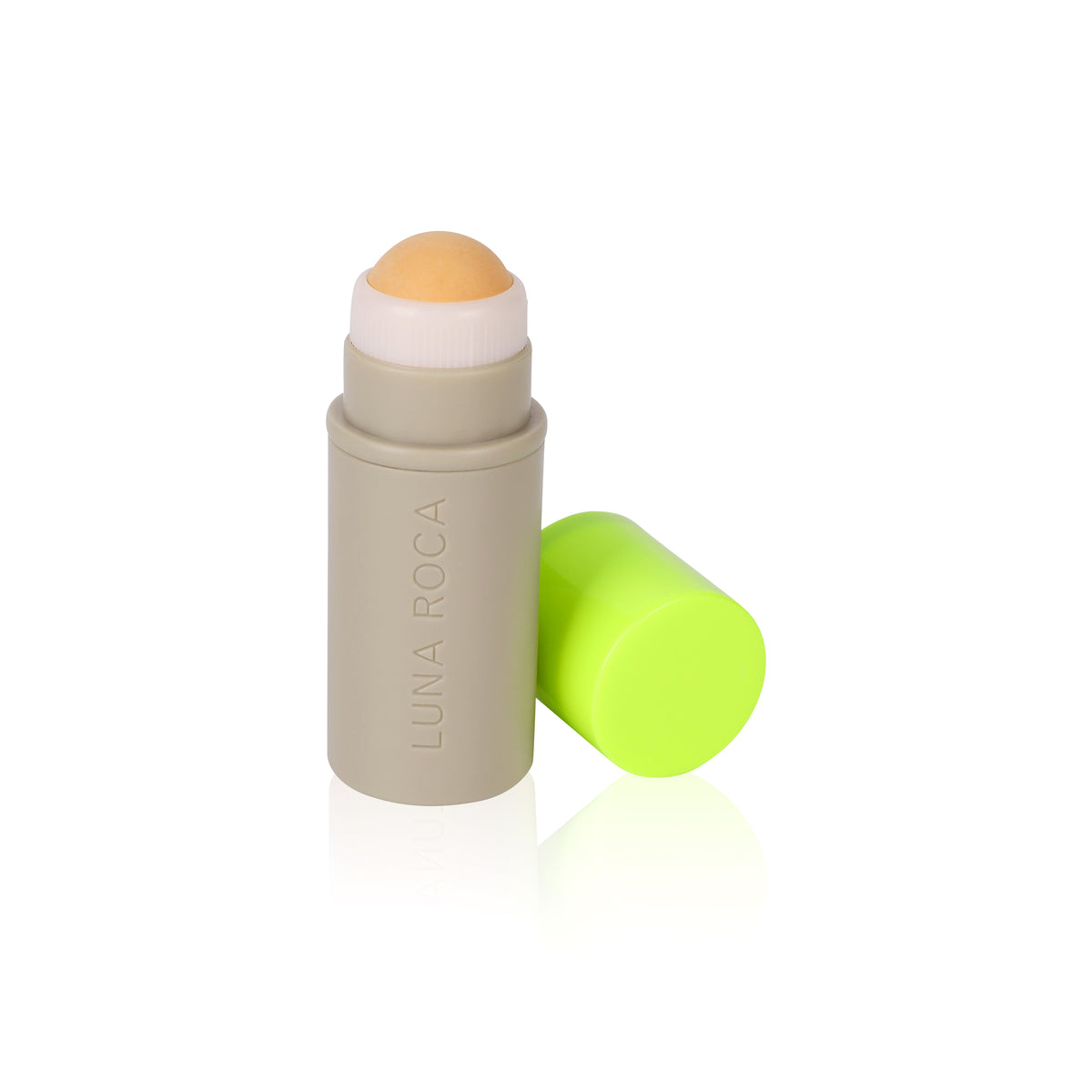
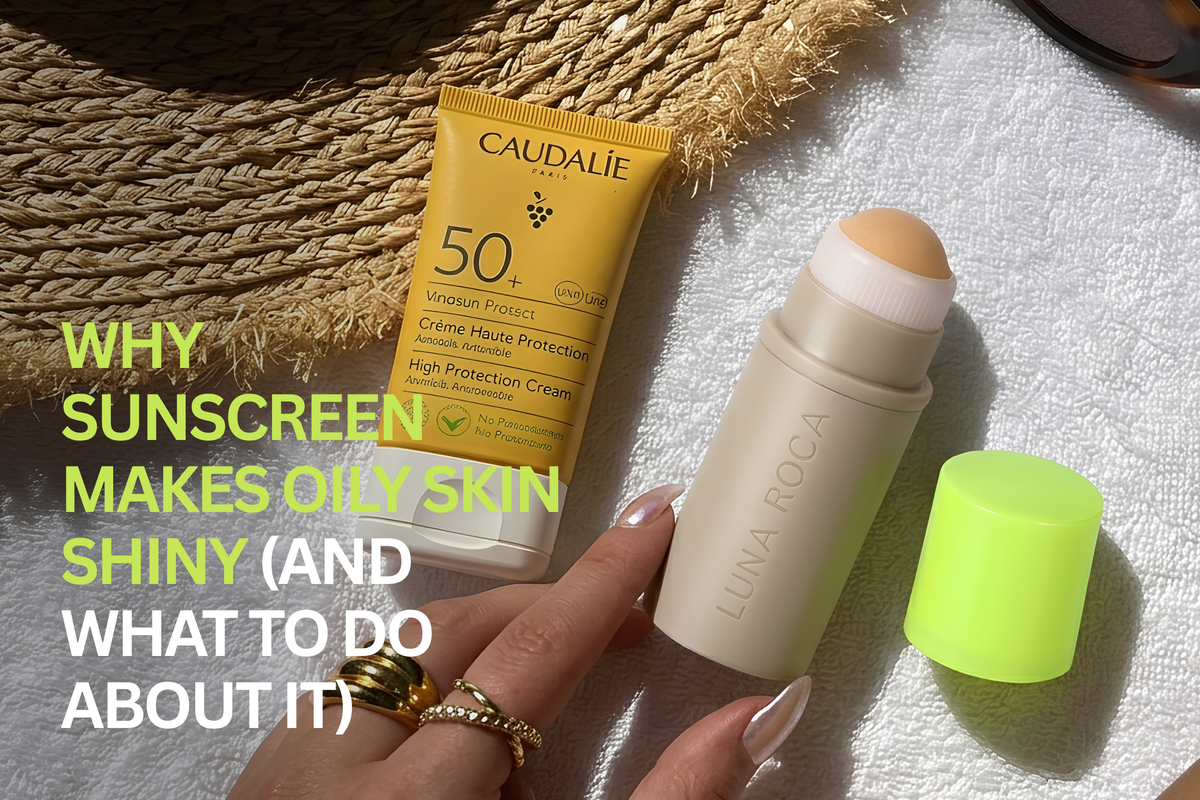
A volcanic stone roller works differently. The Rock & Roller is made from 100% natural lava stone, which is porous and absorbent by nature. Rolled over the T zone, it lifts the oil sitting on the surface without dragging everything underneath it.
If you are due a reapplication, roll first. Fresh sunscreen goes on far more evenly over a matte surface than a slick one.
What about the SPF in your foundation?
Foundation with SPF is a bonus, not a plan. You would need far more product than anyone actually applies to reach the protection stated on the label.
Treat it as a small extra. The sunscreen underneath is still doing the work, and a heavy base on oily skin creates its own problems by mid afternoon.

Reapplying without redoing your face
The two hour rule is where most routines fall apart. Nobody wants to layer sunscreen over a full face of makeup.
The order that works is simple. Absorb the oil first, then reapply with a light hand, pressing rather than rubbing. A stick or fluid formula is easier to control over makeup than a lotion.
It will never be as neat as a fresh application in the morning. It does not need to be. Protection that happens beats protection that is perfect in theory.
A simple SPF routine for oily skin
- Use a light moisturiser and let it absorb fully.
- Apply a fluid or gel sunscreen in two thin layers.
- Wait five minutes before makeup.
- When shine appears, roll the stone over the forehead, nose, and chin.
- Reapply every two hours onto a matte surface rather than a shiny one.
The takeaway
Sunscreen is not the reason your skin looks greasy by mid morning. The texture you chose, the layers underneath, and the oil arriving on top are doing most of the work.
Fix those three things and SPF stops feeling like a compromise. You keep the protection, and you stop negotiating with your finish all day. For the wider mid-day method, see how to fix oily skin without ruining your makeup, or shop the Rock & Roller.
FAQ
Why does sunscreen make my face look shiny?
Most sunscreens use emollients to spread evenly and hold a continuous film, and those ingredients sit on the surface of the skin. On an oily face they add to the oil already there. The correct amount, around a quarter teaspoon for the face, is also more product than most people are used to wearing.
What type of sunscreen is best for oily skin?
Fluid, gel, and dry touch textures suit oily skin best because they sit closer to the skin and leave less film for oil to build on. Avoid formulas marketed as dewy, glowing, or luminous, and apply in two thin layers rather than one heavy one.
How do I stop shine over sunscreen without removing it?
The shine that appears a few hours after application is usually your own oil sitting on top of the sunscreen. A volcanic stone roller lifts that surface oil without wiping the layer underneath away. The Luna Roca Rock & Roller does this in a few passes over the T zone, with no powder involved.
How do you reapply sunscreen over makeup?
Absorb the surface oil first, then reapply with a light hand, pressing the product in rather than rubbing it across the skin. A stick or fluid formula is easier to control over makeup than a lotion, and fresh sunscreen sits more evenly on a matte surface than a shiny one.